
The Intimate Mother and Baby Attachment
Attachment is, in a nutshell, perhaps the most important term in parenting. The close mother and baby attachment that attachment parenting produces is an amazing experience for both that allows mom to become completely in tune with baby’s needs.
Baby Becomes a Part of You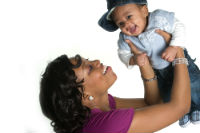

Mother and baby attachment is a special bond; a feeling that draws you magnet-like to your baby; a relationship that, when felt to its deepest degree, causes the mother to feel that the baby is a part of her. This feeling is so strong that, at least in the early months, the attached mother feels complete when she is with her baby and incomplete if they are apart.
Dads can be Attached Too
We will often use the term mother and baby attachment, not to exclude the father, but because, at least in the early months, in most families, the mother and baby attachment is more obvious. This does not mean that a father can’t become deeply attached to the child, but it often seems to be a different type of attachment – not less or better than the mother’s, just different.
In Harmony
Attachment means that a mother and baby are in harmony with each other. Being in harmony with your baby is one of the most fulfilling feelings a mother can ever hope to have. Watch a mother and baby who are attached (in harmony) with each other. When the baby gives a cue, such as crying or facial expressions, signifying a need, the mother, because she is open to the baby’s cues, responds.
Initially, her responses may be a bit strained and not always what the baby needs. But as the mother-baby pair rehearse these cue-response interactions hundreds of times, after a few weeks or months into parenting this cue-response relationship becomes more natural and harmonious. The baby begins to anticipate the response that his mother will give and become further motivated to give more cues, because he learns that he will get a predictable response.
Because the baby gives the mother the feedback that her mothering is appreciated, the mother-baby pair enjoy each other more. They get used to each other. But remember that this all happens over time. Months down the road you will find yourself naturally and automatically responding to one of baby’s cues, where in the beginning you may completely miss it. I remember when one of my daughters was watching a precious video from when her baby was just a couple months old, and in the video she was giggling at the adorable faces the little guy was making. Well, now watching it a year later she exclaimed, “Oh goodness, I should have been nursing him, he’s obviously trying to tell me he’s hungry.”
How do I know if I am Attached with my Baby?
You will know when you get that attached feeling to your baby. When your baby cries and you respond from your heart with a natural and not a strained response, you are attached. When your baby gives you a cue and you respond with a feeling of rightness about your response, you are well on your way to a strong mother and baby attachment.
Periodically check your sensitivity index. If you are becoming increasingly sensitive to your baby:
- Your baby’s cries bother you. You feel for your baby during colicky episodes.
- You are determined to work at developing comforting measures when your baby is fussy.
- You are learning to anticipate your baby’s needs. A facial expression, such as a grimace, precedes a cry. You respond at the grimace stage before your baby needs to cry.
- Your responses are becoming more natural; they flow intuitively. Instead of making a science out of your baby’s cries and going through mental gymnastics (Will I spoil her? Is she manipulating me), you naturally act and feel right about your response.