

What Attachment Parenting is Not
Attachment parenting gets discussed as a new theory on parenting when it is really doing what feels natural for parents and baby. Attachment parenting is loving and attentive parenting but is nothing close to spoiling a child. The idea behind attachment parenting is that you get to intimately understand your child to appropriately encourage and discipline them as they grow up.
It Is Not a New Style of Parenting
Attachment parenting is one of the oldest ways of caring for babies. In fact, it’s the way that parents for centuries have taken care of babies, until childcare advisors came on the scene and led parents to follow books instead of their babies. Picture your family on a deserted island and you’ve just delivered a baby. There are no books, advisors, or in-laws around to shower you with baby-tending advice. The baby B’s of attachment parenting would come naturally to you as they have other cultures who have centuries more child-rearing experience and tradition than all of us have.
It Is Not Indulgent Parenting
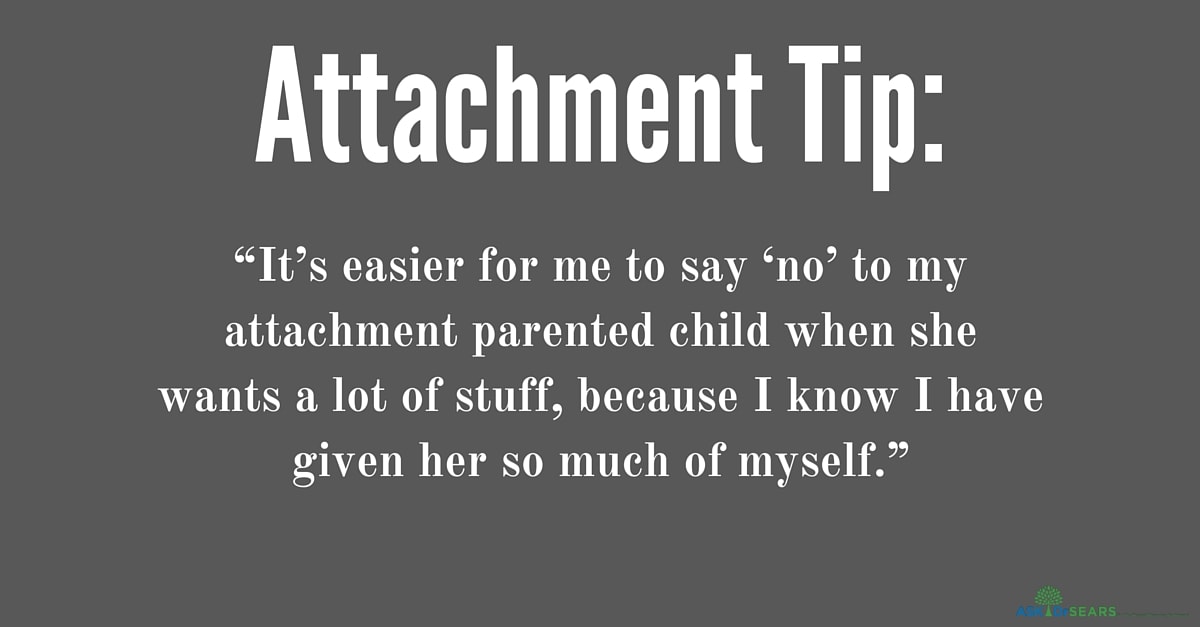
You may hear or worry that being nurturing and responsive to your baby’s needs might spoil your baby and set you up for being manipulated. This is why we stress that attachment parenting is responding appropriately to your baby’s needs, which means knowing when to say “yes” and when to say “no.” Sometimes in their zeal to give children everything they need, it’s easy for parents to give their children everything they want.
Attachment parenting is a question of balance – not being indulgent or permissive, yet being attentive. As you and your baby grow together, you will develop the right balance between attentive, but not indulgent. In fact, being possessive, or a “smother mother” (or father) is unfair to the child, fosters an inappropriate dependency on the parent, and hinders your child from becoming normally independent. For example, you don’t need to respond to the cries of a seven-month-old baby as quickly as you would a seven-day-old baby.
As your baby grows, you become more expert in reading her cries, so you can gradually delay your response. Say, for example, you are busy in the kitchen and your seven-month-old is sitting and playing nearby and cries to be picked up. Instead of rushing to scoop your baby up, simply acknowledge your baby and give your baby “it’s okay” cues. Because you and your baby are so connected, your baby can read your body language and see that you’re not anxious, so you naturally give your baby the message, “No problem, baby, you can handle this.” In this way, you’re being a facilitator , and because of your close attachment you’re actually better able to help your baby delay gratification and ease into independence.
It Is Not Permissive Parenting
You cannot control a child. Attachment parents become like gardeners: you can’t control the color of the flower or the time of the year it blooms, but you can pick the weeds and prune the plant so that the flower blooms more beautifully. That’s shaping. Attachment parents become master behavior-shapers.
It Is Not Martyr Mothering
Don’t think that attachment parenting means baby pulls mommy’s string and she jumps. Because of the mutual sensitivity that develops between attached parents and their attached children, parents’ response time can gradually lengthen as mother enables the older baby to discover that he does not need instant gratification. Yes, you give a lot of yourself in those early months, but you get back a lot more in return. Attachment parenting is the best investment you’ll ever make — in your child, and yourselves.
“Won’t a mother feel tied down by constant baby-tending?”
Mothers Do Need Baby Breaks
This is why shared parenting by the father and other trusted caregivers is important. But with attachment parenting, instead of feeling tied down, mothers feel tied together with their babies. Attachment mothers we interviewed described their feelings: “I feel so connected with my baby.” “I feel right when with her, not right when we’re apart.” “I feel fulfilled.”
Remember, too, that attachment parenting, by mellowing a child’s behavior, makes it easier to go places with your child. You don’t have to feel tied down to your house or apartment and a lifestyle that includes only babies.
Attachment Parenting Is Not Hard
Attachment parenting may sound like one big give-a-thon. Initially, there is a lot of giving. This is a fact of new parent life. Babies are takers, and parents are givers. One of the payoffs you will soon experience of attachment parenting is one we call mutual giving – the more you give to your baby, the more baby gives back to you. This is how you grow to enjoy your child and feel more competent as a parent. Remember, your baby is not just a passive player in the parenting game. The infant takes an active part in shaping your attitudes, helping you make wise decisions as you become an astute baby-reader.
It May Sound Difficult
In the long run attachment parenting is actually the easiest parenting style. What is “hard” about parenting is the feeling “I just don’t know what my baby wants” or “I just can’t seem to get through to her.” If you feel you really know your baby and have a handle on the relationship, parenting is easier and more relaxed. There is great comfort in feeling connected to your baby. Attachment parenting is the best way we know to get connected. True, this style of parenting takes a tremendous amount of patience and stamina, but it’s worth it. Attachment parenting early on makes later parenting easier, not only in infancy but in childhood and teenage years. The ability to read and respond to your baby, carries over into the ability to get behind the eyes of your growing child and see things from her point of view. When you truly know your child, parenting is easier at all ages.
It Is Not Rigid
On the contrary, attachment parenting has options and is very flexible. Attachment mothers speak of a flow between themselves and their baby; a flow of thoughts and feelings that help a mother pull from her many options the right choice at the right time when confronted with the daily “what do I do now?” baby-care decisions. The connected pair mirror each other’s feelings. The baby perceives himself by how the mother reflects his value. This insight is most noticeable in the mother’s ability to get behind the eyes of her child and read her child’s feelings during discipline decisions. One day our two-year-old, Lauren, impulsively grabbed a carton of milk out of the refrigerator and spilled it on the floor. As Lauren was about to disintegrate, Martha mellowed out the situation and preserved the fragile feelings of a sensitive child and prevented the angry feelings of inconvenienced parents. When I asked how she managed to handle things so calmly, she said, “I asked myself if I were Lauren, how would I want my mother to respond?”
It Is Definitely Not Spoiling a Child
New parents ask, “Won’t holding our baby a lot, responding to cries, nursing our baby on cue, and even sleeping with our baby create an overly dependent manipulative child?” Our answer is an emphatic no. In fact, both experience and research have shown the opposite. Attachment fosters independence. Attachment parenting implies responding appropriately to your baby; spoiling suggests responding inappropriately. The spoiling theory began in the early part of this century when parents turned over their intuitive childrearing to “experts”; unfortunately, the childcare thinkers at the time advocated restraint and detachment (i.e., formulas for childcare), along with scientifically produced artificial baby milk – “formula” for feeding babies. They felt that if you held your baby a lot, fed on cue, and responded to cries, you would spoil and create a clingy, dependent baby. There was no scientific basis to this spoiling theory, just unwarranted fears and opinions. We would like to put the spoiling theory on the shelf – to spoil forever.
You Cannot Spoil a Baby by Attachment
Spoiling means leaving something alone, such as putting food on the shelf to spoil. The attachment style of parenting does not mean overindulgence or inappropriate dependency. The possessive parent, or “hover mother,” is one who keeps an infant from doing what he needs to do because of her own insecure needs. This has a detrimental effect on both the infants and the parents. Attachment differs from prolonged dependency. Attachment enhances development; prolonged dependency will hinder development.
If you would like to work with a Certified Health Coach during your pregnancy, or postpartum, you can find a Coach in your area.